
AFIACARE® Biomedical department

Biomedical services

Maintenance, on-site staffing, audit & consulting and training: AFIACARE supports the critical equipment of your healthcare facility.

Patient performance & safety

Biomedical maintenance

Preventive and corrective maintenance of your medical devices, performed by certified biomedical technicians. We cover the critical equipment of your facility:

On-site staffing

Our on-site biomedical staff

We provide qualified on-site biomedical technicians and engineers to ensure continuity of care, reinforce your teams or cover absences. Degressive rates by number of days, contract formula available.

Biomedical engineer

Fleet management, supplier relations and regulatory compliance. Your strategic on-site partner.

Biomedical technician

Preventive and corrective maintenance, traceability and electrical safety. A direct reinforcement for your teams.

GMAO - AFIACARE Workspace®

Track your interventions in real time via the client portal, or steer all biomedical activity — from request to report — with full cost control.
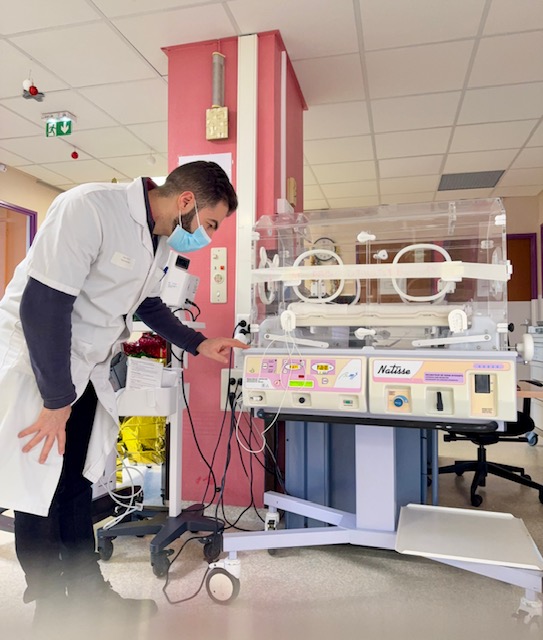
On-site biomedical staff
Biomedical expertise

Audit & consulting

Independent assessment and consulting to optimize your biomedical organization. From assessment to action plan:

Equipment inventory assessment

Assessment of your equipment inventory.

Biomedical engineering consulting

Strategic biomedical engineering advice.

Biomedical workshop setup

Setup of a biomedical workshop.

Equipment connectivity

Connectivity of your equipment.

Maintenance training modules

Biomedical training

Training modules for biomedical technicians to internalize maintenance and master device performance. Build your team’s autonomy:

Internalize maintenance

Bring maintenance operations in-house.

Set up processes

Define robust maintenance processes.

Performance control on devices

Performance control on medical devices.

Electrical safety testing

Electrical safety testing.

Our training

Essential - Biomedical technician

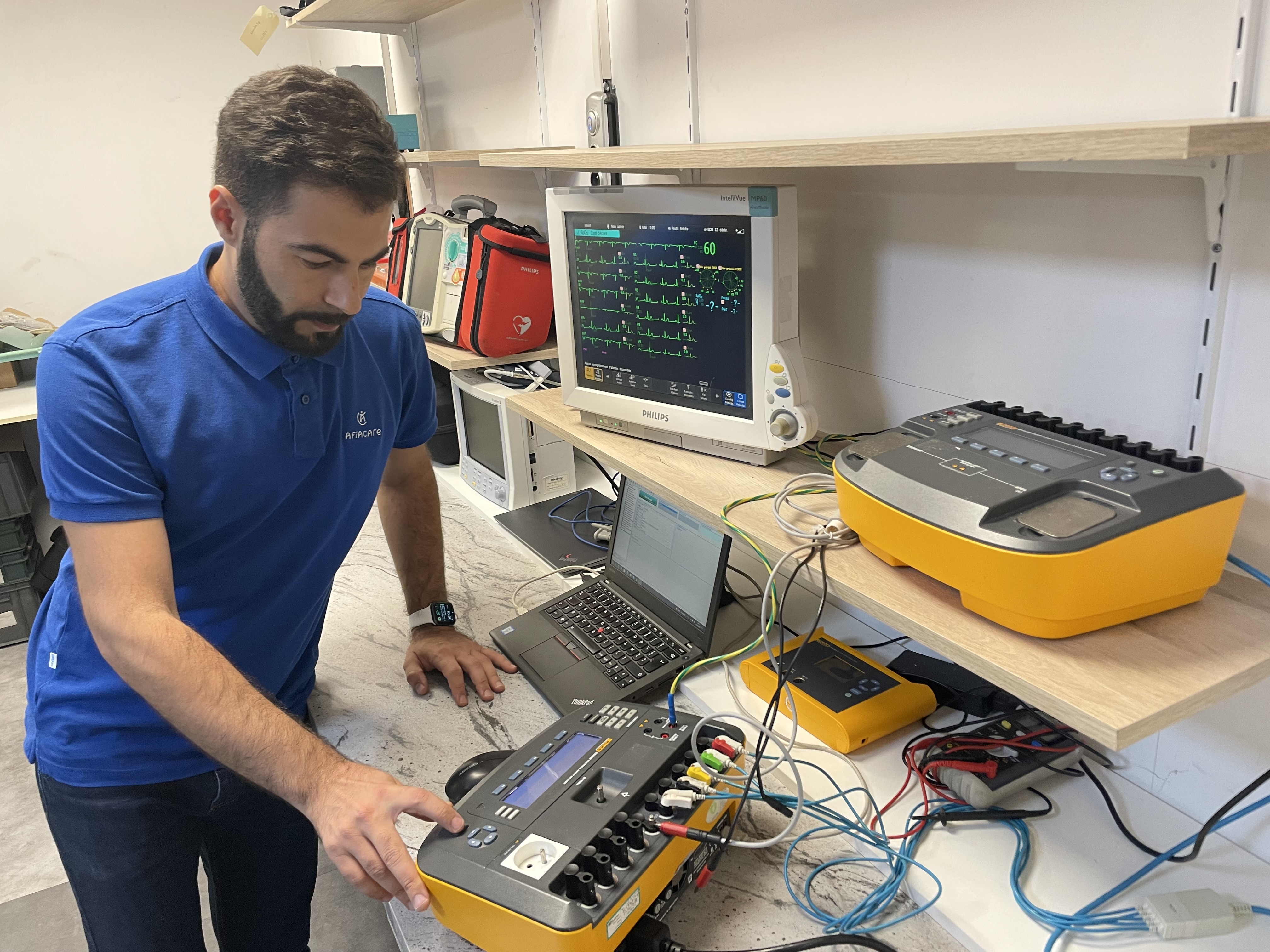
Whether for a new technician or experienced technicians trained by manufacturers, this training provides a solid foundation to perform preventive maintenance and inspections on at least 70% of your medical device fleet (patient monitoring, ECG – electrocardiogram, cardiotocograph, defibrillators, infusion devices, incubators). A 5-day program (1 week):

Day 1Electrical safety testing
Morning
  • Regulations in the biomedical field
  • The IEC 60601-1 standard
  • The IEC 62353 standard
Afternoon
  • Workshop – Driving the testers with Fluke OneQA
  • Workshop – Setting up an electrical safety testing procedure
  • Knowledge assessment and certificate issuance
Day 2Patient monitoring
Morning
  • Regulations in the biomedical field
  • How the monitor and the electrocardiograph work
  • Using the FLUKE ProSim 8 and ESA 612 testers
Afternoon
  • Electrical safety testing
  • Monitor performance verification
  • Knowledge assessment and certificate issuance
Day 3ECG – Cardiotocograph
Morning
  • Introduction
  • How the ECG and the cardiotocograph work
  • Using the tester and simulator
Afternoon
  • Electrical safety testing
  • ECG and cardiotocograph performance verification
  • Knowledge assessment and certificate issuance
Day 4Defibrillator
Morning
  • Introduction
  • How the defibrillator works
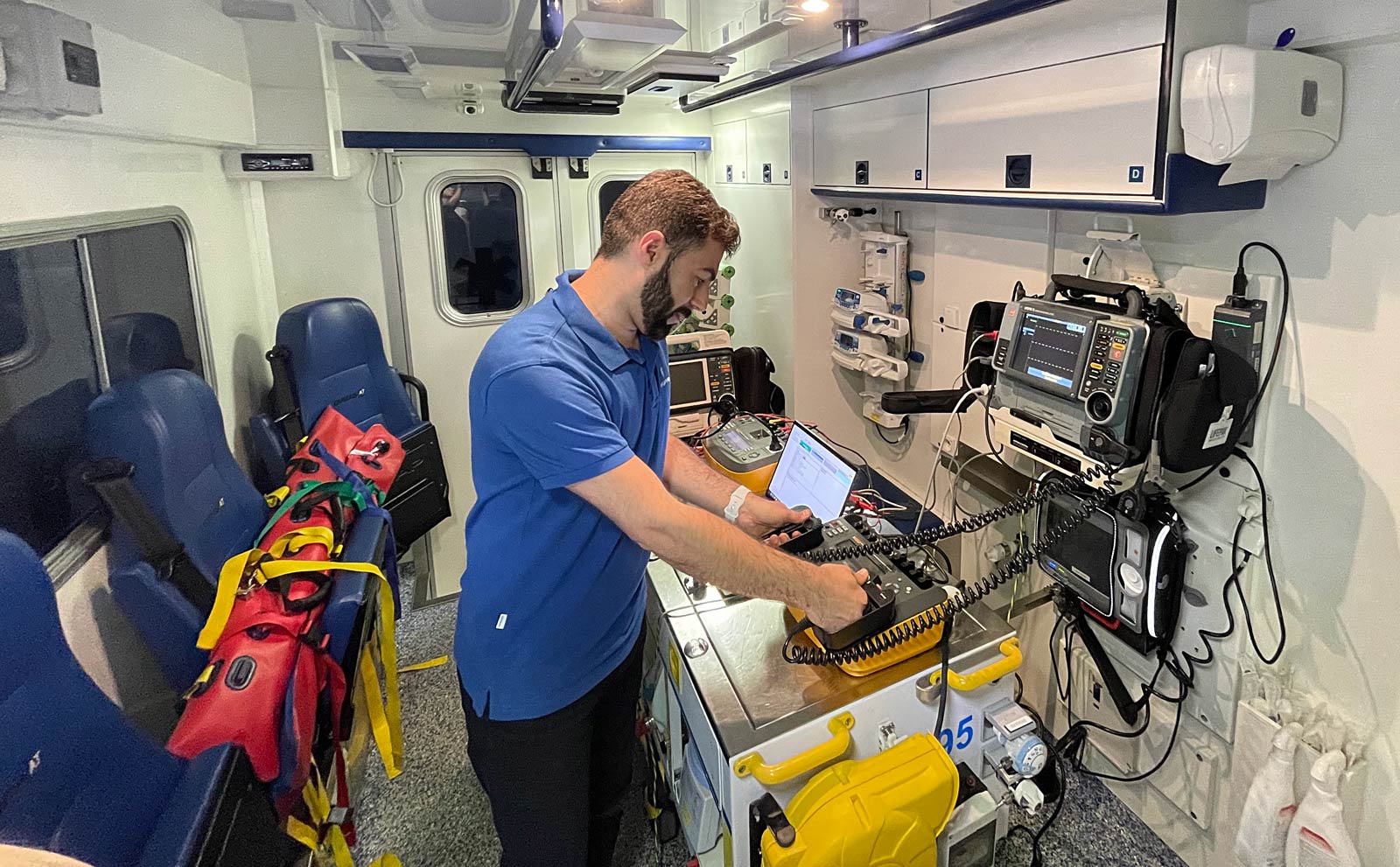
  • Using the FLUKE Impulse 7000 DP tester
Afternoon
  • Electrical safety testing
  • Defibrillator performance verification
  • Knowledge assessment and certificate issuance
Day 5Infusion
Morning
  • Introduction
  • How the syringe pump and infusion pump work
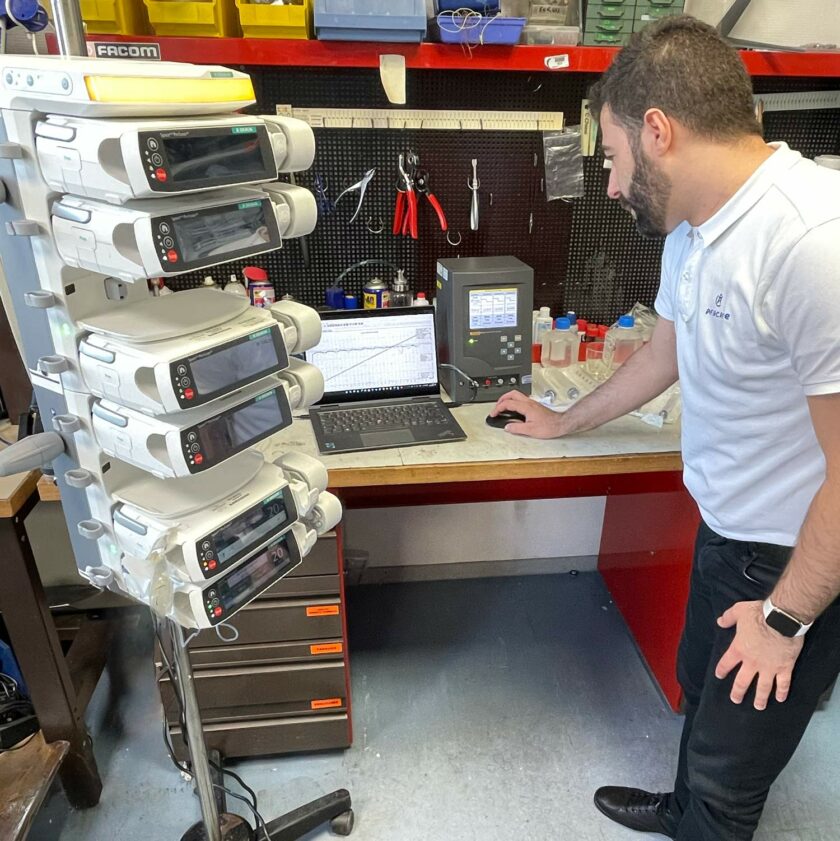
  • Using the FLUKE IDA 5 tester
Afternoon
  • Electrical safety testing
  • Syringe pump and infusion pump performance verification
  • Knowledge assessment and certificate issuance

Let’s talk about your project

Our biomedical experts answer within 24 hours.

Contact us

FAQ

ANSM: Maintenance obligation?

“The maintenance of a medical device encompasses all activities intended to keep or restore a medical device to a state or specified conditions of operational safety in order to perform a required function. (Article R5211-5 of the French Public Health Code)

The operator must also implement a specific organization to ensure that the planned maintenance is properly carried out.” The French National Agency for Medicines and Health Products Safety (ANSM)

ANSM: Which medical devices are subject to biomedical maintenance?

“The decree of March 3, 2003 establishes the list of devices subject to mandatory maintenance:

  • Medical devices required for the production and interpretation of diagnostic imaging
  • Medical devices required for defining, planning, and delivering radiotherapy treatments
  • Medical devices required for performing nuclear medicine procedures
  • Other medical devices that expose individuals to ionizing radiation
  • Class IIb and III medical devices other than those mentioned above

The decree specifies that these provisions do not apply to devices for which operators can demonstrate that maintenance is unnecessary due to their design or intended use.” The French National Agency for Medicines and Health Products Safety (ANSM)

ANSM: What are the different classes of medical devices?

“Once the product’s status as a medical device has been defined, the manufacturer is responsible for determining its classification. The classification rules are set out in the European Regulation of 2017: for medical devices, refer to Annex VIII of Regulation (EU) 2017/745.

How to classify a medical device? Medical devices are classified based on:

  • Their intended purpose (see definition in point 12 of Article 2 of the Medical Device Regulation);
  • The level of risk associated with their use (duration of use, part of the body exposed, internal or external to the body);
  • Potential risks to public health related to their use.

Devices are divided into four classes, ranging from the lowest risk (Class I) to the highest risk (Class III):

  • Class I: gauze pads, eyeglasses, crutches, etc.;
  • Class IIa: contact lenses, ultrasound devices, dental crowns, etc.;
  • Class IIb: condoms, lens disinfectant products, etc.;
  • Class III: breast implants, stents, hip prostheses, etc.

Depending on the device class, obtaining CE marking or certification may require the involvement of a notified body. This applies to Class Im (Class I with a measuring function), Class Is (Class I marketed in a sterile condition), Class Ir (Class I reusable surgical instruments), Class IIa, IIb, and III.” The French National Agency for Medicines and Health Products Safety (ANSM)

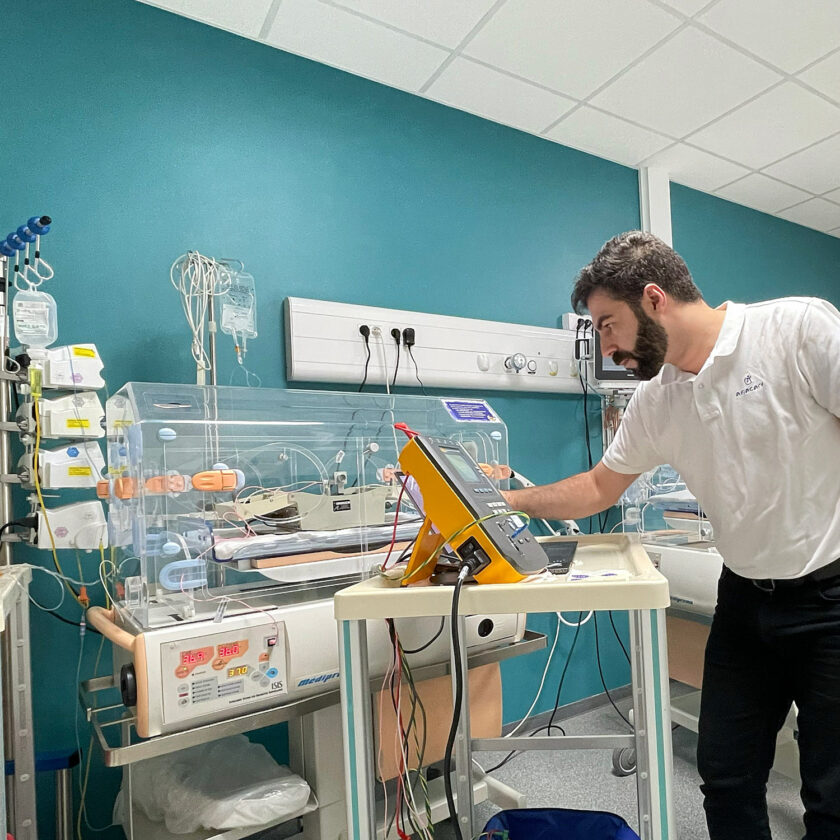
Example of Class IIb device maintenance performed by AFIACARE: neonatal incubators, oximeters, ECG machines, external defibrillators, patient monitors…

Definition of preventive and corrective maintenance?

Preventive maintenance refers to a set of proactive actions aimed at keeping a medical device in optimal condition, preventing breakdowns, and ensuring the safety of patients and users.

Corrective maintenance (also called curative maintenance) of a medical device consists of all interventions performed after a failure or malfunction has occurred, in order to restore the device to working condition.

What does the preventive maintenance of a medical device include?

Preventive maintenance encompasses a series of planned actions designed to ensure the safety, reliability, and regulatory compliance of medical devices. It is carried out before any failure occurs to extend the equipment’s lifespan and reduce risks.

It generally includes:

  • General inspection: visual checks and verification of mechanical and electrical safety.
  • Accessory check: examination of cables, connectors, filters, and batteries, with replacement if necessary.
  • Electrical safety test: validation of compliance with standards to eliminate any risk of electric shock to the patient or user.
  • Functional tests: verification of proper operation of modules (measurements, alarms, interfaces) using simulators and measuring instruments, with recalibration if required.
  • Service report: complete documentation of operations, results, and corrective actions, indicating whether the device is compliant.
What is an electrical safety test for a medical device and why is it important?

An electrical safety test is a critical procedure that ensures the medical device complies with international electrical protection standards (e.g., IEC 62353). This test guarantees that the device poses no risk of electric shock or leakage current to either the patient or medical staff.

Why is this important?

  • Patient and user safety: preventing any electrical hazards.
  • Regulatory compliance: meeting legal and normative requirements.
  • Equipment reliability: reducing the risk of failure and extending the device’s lifespan.

This check is performed using certified instruments and includes measuring leakage currents, verifying insulation, and checking electrical connections.

How is the price of preventive maintenance calculated at AFIACARE?

At AFIACARE, we are committed to providing transparent preventive maintenance services tailored to your needs. The pricing is determined based on several key factors:

  • A discounted flat rate per equipment type with your loyalty benefit. The complexity of the intervention directly affects the time required to perform maintenance. The more sophisticated the device, the more expertise and specialized testing equipment are needed. We value our loyal customers — AFIACARE offers discounts of up to 45% as a reward for your trust, excluding travel fees.
  • Equipment availability and location. Devices may be grouped in the same department or spread across multiple sites within your facility. This organization impacts both the duration and logistics of the intervention.
  • Fixed travel fee. A travel fee is applied based on the distance from Paris. This fee covers the minimum costs associated with the intervention, ensuring a service with no hidden charges.
How is the price for an on-site biomedical technician day at the hospital calculated?

At AFIACARE, we offer clear and competitive pricing for the presence of a biomedical technician at your hospital. The price calculation is based on two main elements:

  • Base daily rate with sliding-scale discounts. We apply a standard daily rate, complemented by progressive discounts depending on the number of intervention days. The more days you book, the greater the discount — helping you optimize costs for extended needs.
  • Fixed travel fee. A travel fee is added based on the distance from Paris. This fee covers the minimum costs associated with the intervention, ensuring a service with no hidden charges.